


Orientation and Mobility
Orientation and Mobility is one of four departments of South African Guide-Dogs Association.
It was established in 1974 to provide people with visual impairments with an alternative to a Guide Dog, namely the long cane. The long cane is an extremely useful mobility aid that can become an extension of a person’s sense of touch.
Freedom and independence mean different things to different people. To a person who is visually impaired it may mean the ability to go to the bank, visit friends, go shopping unaided or travel to work safely. This means the need to be able to know where they are and to move around safely. These skills are called Orientation and Mobility.
Apply for Orientation & Mobility Assistance
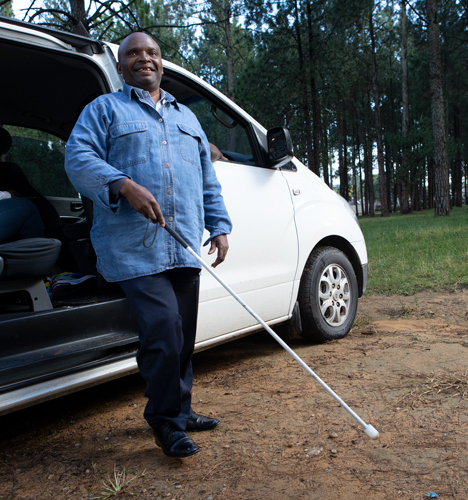
The Orientation and Mobility Department plays two main roles in assisting you:
- Orientation and Mobility Support
- Our Orientation and Mobility Practitioners provide long cane, visual skills and daily living skills training to children and adults with visual impairment, at no cost.
- Provide visual impairment awareness training to a range of audiences.
- Training Orientation and Mobility Practitioners who teach people with visual impairment cane skills and skills of daily living.
Orientation and Mobility Support
We employ Orientation and Mobility Practitioners to provide services to you if you are visually impaired. The training aims to give you a greater level of independence in your life. If you are blind or partially sighted, you are eligible to receive this free service. We cover the Pretoria and greater Johannesburg areas.


Our services include teaching you home or personal management skills such as how to iron clothes, clean, pour hot and cold drinks, cut and peel vegetables, cook and identify money. Orientation and Mobility skills include teaching you sighted guide skills, room orientation, cane skills and how to travel on your routes. An Orientation and Mobility Practitioner can give your family members practical tips that they can use to assist you. Our practitioners provide these services in your home after a comprehensive evaluation of your requirements. We train our practitioners to work with children and can offer advice to parents and caregivers.
Visual Impairment Awareness Training
Orientation and Mobility Support also provides workshops and short courses on a variety of visual impairment and Orientation and Mobility related topics. Our clients include the nursing and teaching professions, care-givers as well as employers and colleagues of people with visual impairment. As our area of expertise is visual impairment, our awareness workshops enable others to gain insight into the world of the visually impaired.
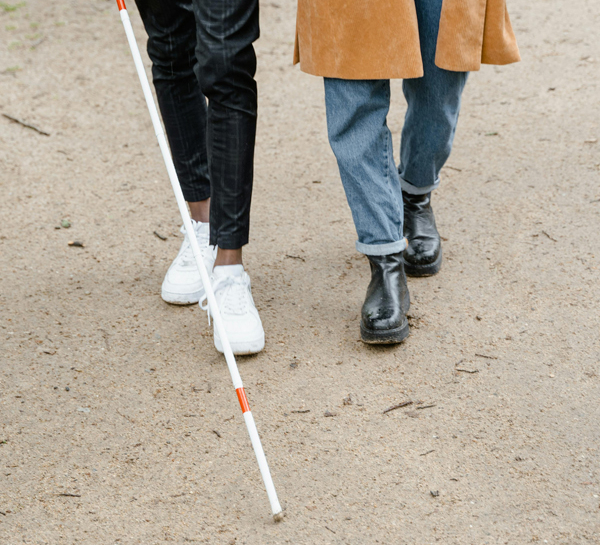

Training Orientation and Mobility Practitioners
The College of Orientation and Mobility presents a two year, NQF level 5, ETDP Seta accredited Diploma in Orientation and Mobility Practice. This qualification includes theoretical and practical components. You learn to teach people with visual impairment how to use the long cane and the skills of daily living, such as cooking, cleaning and identifying money.
Much of your training takes place while under blindfold and includes a wide variety of training situations. You teach people one-to-one in the person’s home, work or school environment. You do not work with dogs. The course content covers topics such as:
- Orientation and Mobility
- Medical conditions
- Advocacy
- Counselling
- Early child development
- Low vision
- Skills of daily living

Your lectures take place at the College of Orientation and Mobility, and practical experience involves teaching people with visual impairments within the community. In South Africa, there are approximately 1 600 000 people with visual impairment (World Health Organization Visual Impairment and Blindness 2010 Fact Sheet). One qualified Orientation and Mobility Practitioner can train between 40 to 45 people with visual impairments per year. This is a scarce skill as there are approximately only 50 to 60 qualified Orientation and Mobility Practitioners employed throughout the country.
Our students are from a previously disadvantaged background and the services that they provide are mostly within the urban township environments.